
has become one of the most important concerns for individuals, businesses, startups, online stores, and organizations that store sensitive information digitally. In 2026, companies increasingly depend on websites, mobile applications, cloud storage, digital payments, online customer accounts, and electronic records to manage their daily operations. Although these technologies make business activities faster and more convenient, they also create opportunities for cybercriminals to steal information, attack computer systems, demand ransom payments, and misuse confidential data.
What Is Cyber Insurance?
Cyber insurance is a type of insurance designed to help eligible policyholders manage certain financial losses arising from cyber incidents, data breaches, ransomware attacks, network security failures, and other covered digital risks. Depending on the policy, it may help pay for technical investigations, data recovery, legal advice, customer notifications, public relations services, business interruption losses, and third-party liability claims.
For example, imagine that an online business stores customer names, email addresses, contact numbers, and payment-related information. If cybercriminals gain unauthorized access to the company’s systems, the business may need cybersecurity specialists to investigate the attack, notify affected customers, restore its systems, and obtain legal assistance.
Why Cyber Insurance Is Important in 2026
Cyber threats can affect businesses of almost every size. Large companies may have dedicated security departments, while small businesses, freelancers, clinics, educational institutions, online sellers, and digital service providers may have fewer resources to manage sophisticated attacks. Criminals may target organizations through phishing emails, stolen passwords, malicious software, fake payment requests, compromised websites, and weaknesses in outdated systems. A successful incident can interrupt normal business operations and prevent customers from accessing important services. For an online retailer, even a short interruption may mean lost sales, delayed deliveries, customer complaints, and additional technical expenses.
What Does Cyber Insurance Cover?
Cyber insurance coverage varies between insurers and policies, so buyers should read the wording carefully before purchasing a plan. One common area is data breach response. When confidential information is exposed or stolen during a covered incident, the policy may pay eligible expenses for investigating the breach, identifying affected records, arranging customer notifications, and obtaining professional support.
Some policies may also cover credit monitoring or identity protection services for affected individuals where these benefits are expressly included. Another important area is incident response and technical investigation. Cybersecurity experts may be required to determine how an attacker entered a network, which systems were affected, and what actions are necessary to prevent further damage. Depending on the policy, these services may be included within a specific response limit or arranged through the insurer’s approved providers.
First-Party and Third-Party Cyber Coverage
Cyber insurance is often divided into first-party coverage and third-party coverage. First-party coverage focuses on losses experienced directly by the insured business. It may include eligible investigation costs, data restoration, business interruption, cyber extortion response, and customer notification expenses.
This protection is particularly relevant to businesses that want help managing the immediate operational and financial consequences of a cyber incident. Third-party coverage, on the other hand, relates to claims made against the insured by customers, clients, partners, or other parties who allege that a covered cyber incident caused them harm. Depending on the contract, this may include legal defence costs and certain liability payments.
Cyber Insurance Cost in 2026
The cost of cyber insurance in 2026 depends on several factors, and there is no single premium that applies to every business. Insurers may consider annual revenue, industry, company size, the type and quantity of information stored, previous cyber incidents, security controls, required coverage limits, and the deductible selected by the policyholder. A small consultancy with limited customer data may have a different risk profile from an online retailer that processes thousands of transactions every day. Similarly, organizations operating in sectors that handle sensitive personal, medical, or financial information may face different underwriting requirements.
Key Benefits of Cyber Insurance
One of the biggest potential benefits of cyber insurance is financial risk management. Recovering from a major cyber incident can involve several different expenses at the same time, including forensic investigations, legal advice, system restoration, customer communication, and lost business income. A suitable policy may reduce the amount of eligible costs the business must pay from its own funds. This can be especially important for small organizations that do not maintain large emergency reserves.
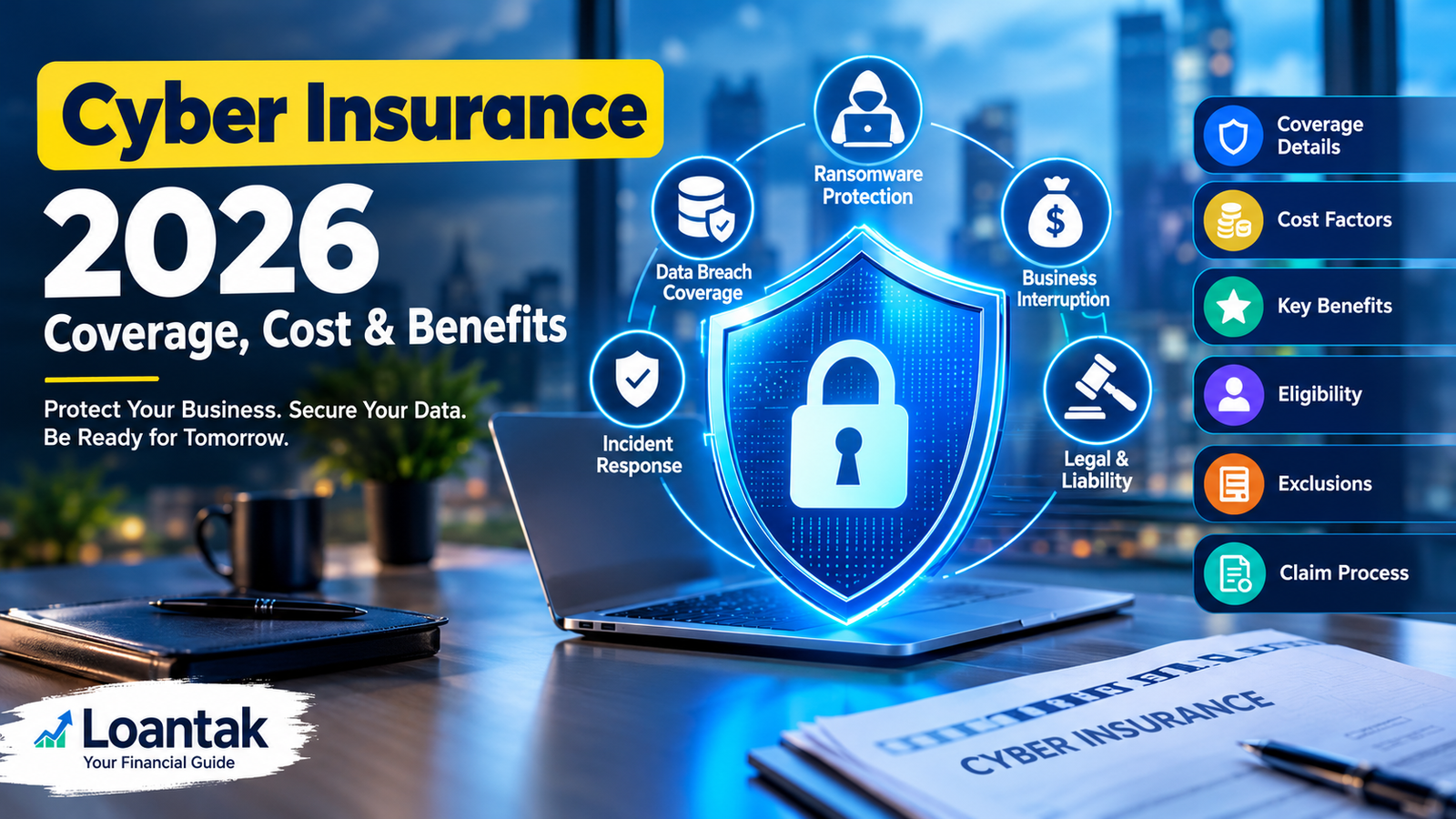
Cyber insurance may also help businesses address third-party claims and protect continuity. If a covered incident affects customers or contractual partners, legal defence expenses and eligible liability payments can become significant. Appropriate insurance can help manage these costs under the policy’s terms. For businesses whose revenue depends on online services, business interruption protection may also help reduce the financial impact of certain covered disruptions. Loantak highlights that these benefits are conditional, not guaranteed payments. Policyholders must follow reporting procedures, cooperate with the insurer, and maintain the security standards required by the contract.
Who Should Consider Cyber Insurance?
Cyber insurance may be worth considering for small and medium-sized businesses, online stores, technology companies, digital marketing agencies, professional service providers, healthcare organizations, educational institutions, and other businesses that rely on computer networks or store confidential information. A company does not need to be a major corporation to experience a cyber incident. Even a small business can face significant disruption if it loses access to its customer database, accounting software, website, or online payment system.
Common Cyber Insurance Exclusions
Understanding exclusions is just as important as understanding coverage. Policies may exclude certain losses caused by known security weaknesses, intentional wrongdoing, dishonest conduct, or incidents that do not meet the contract’s definition of a covered cyber event. Some policies contain specific exclusions or restrictions for war, certain state-sponsored cyber operations, infrastructure failures, unapproved payments, or incidents involving service providers. The exact wording matters because exclusions differ between insurers.
How to Choose the Right Cyber Insurance Policy
Start by assessing the information your business stores, the systems it depends on, and the financial consequences of losing access to those systems. Identify the potential costs of investigating an attack, restoring data, notifying customers, defending legal claims, and operating during downtime. Next, compare policies from authorized insurers and examine the limits for each coverage section rather than focusing only on the overall maximum benefit. A high headline limit may not mean that every type of loss receives that amount of protection.
How to Make a Cyber Insurance Claim
If your organization experiences a suspected cyber incident, follow the policy’s reporting instructions promptly. Contact the insurer or its designated incident-response team as required by the contract, and avoid delaying notification while attempting to understand the full extent of the damage. Preserve relevant evidence, including security logs, suspicious emails, system alerts, invoices, and records of the incident. Do not destroy or alter evidence unless instructed by qualified responders as part of the recovery process.
Conclusion
Cyber Insurance 2026 can be a useful financial protection option for businesses that depend on digital systems, online payments, customer databases, cloud platforms, or electronic records. Depending on the policy, it may help cover eligible data breach response expenses, technical investigations, business interruption losses, cyber extortion response costs, and third-party liability claims. However, coverage, cost, eligibility, and exclusions vary considerably, so businesses should carefully compare policy documents and obtain quotations based on their specific circumstances.
FAQS: Cyber Insurance 2026
1. What is Cyber Insurance 2026?
Cyber Insurance 2026 refers to cyber risk insurance options available in 2026 that may help businesses manage eligible financial losses resulting from covered cyber incidents, subject to policy terms and exclusions.
2. How much does cyber insurance cost?
The premium depends on business size, industry, revenue, security controls, coverage limits, deductibles, and the insurer’s underwriting criteria. Businesses should request individual quotations for accurate pricing.
3. Does cyber insurance cover ransomware attacks?
Some policies cover eligible ransomware response or cyber extortion expenses, but coverage is not automatic. Specific exclusions, legal restrictions, insurer approval requirements, and policy conditions may apply.
4. Can small businesses buy cyber insurance?
Yes, some insurers offer cyber insurance for eligible small businesses. Availability, minimum security requirements, and premiums depend on the insurer and the business’s risk profile.
5. Does cyber insurance prevent cyberattacks?
No. Cyber insurance does not prevent attacks. Businesses still need effective security controls, employee training, software updates, access restrictions, and reliable backups.
6. Is cyber insurance mandatory in India?
Cyber insurance is not universally mandatory for every business in India. However, particular contractual, regulatory, or sector-specific requirements may affect an organization’s obligations. Businesses should check the rules applicable to them.
7. Why should businesses compare cyber insurance policies?
Comparing policies helps businesses understand coverage limits, exclusions, deductibles, claim procedures, and incident-response services before selecting a plan that suits their needs.